Hand pain can make everyday activities frustrating. Gripping, typing, writing, cooking, opening jars, carrying bags, using tools, exercising, or performing work tasks can all become more difficult when the hand or fingers are painful, stiff, weak, or sensitive.
Hand pain may start suddenly after a fall, impact, twist, crush injury, or sports-related incident. It can also develop gradually from repetitive use, overuse, gripping, computer work, manual labour, arthritis, tendon irritation, or nerve sensitivity.
The hand is made up of many small bones, joints, muscles, tendons, ligaments, nerves, and connective tissues that work together to support grip, dexterity, coordination, and fine motor control. Because the hand works closely with the wrist, forearm, elbow, shoulder, and neck, symptoms may be influenced by more than one area.
At CORPEO, located in Gloucester Centre in Ottawa’s east end, our physiotherapy team takes a detailed approach to understanding what is contributing to your hand pain. The goal is to reduce discomfort, improve mobility, restore strength, and help you return to daily tasks with more comfort and confidence.
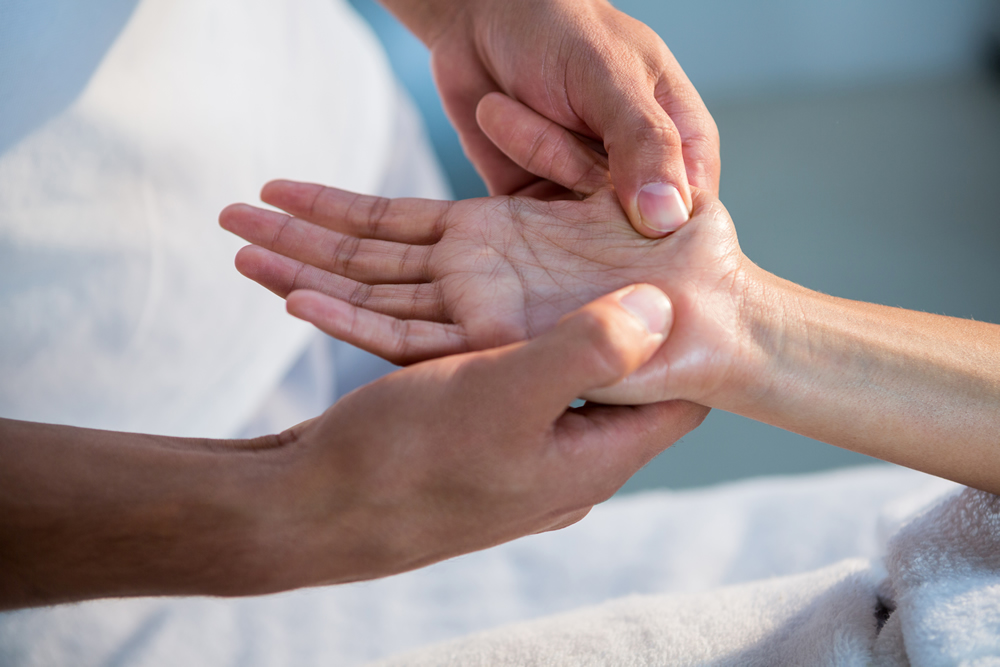
Hand pain can develop for many reasons. It may be related to repetitive strain, tendon irritation, joint stiffness, nerve sensitivity, arthritis, weakness, or injury to the bones, joints, ligaments, or soft tissues.
Common contributors to hand pain include:
Repeated gripping, typing, tool use, lifting, writing, or fine hand movements can place stress on the muscles, tendons, and joints of the hand and fingers. Symptoms often build gradually and may worsen with continued use.
Tendons help move the fingers, thumb, and hand. When they become irritated from overuse, repetitive strain, or sudden overload, pain may develop with gripping, pinching, lifting, or moving the fingers. Some people may also notice stiffness, tenderness, or reduced hand strength.
Carpal tunnel syndrome occurs when the median nerve becomes compressed or irritated as it travels through the wrist into the hand. Symptoms may include numbness, tingling, pain, or weakness, often affecting the thumb, index, middle, or ring fingers.
Nerves that travel from the neck, shoulder, arm, and wrist into the hand can become sensitive or irritated. This may contribute to tingling, numbness, burning, weakness, or symptoms that change with posture or arm position.
Arthritis or joint changes in the hand and fingers can lead to stiffness, aching, swelling, reduced grip strength, and difficulty with fine motor tasks. Symptoms may be more noticeable in the morning, after activity, or during gripping and pinching.
Hand and finger injuries can happen after a fall, jammed finger, collision, crush injury, or direct impact. Some injuries require medical assessment first. Physiotherapy may be part of recovery once appropriate, helping restore movement, strength, and function.
Hand pain can vary depending on the cause, severity, and stage of recovery.
Symptoms may include:
Physiotherapy can help identify what is contributing to your hand pain and guide you through a personalized recovery plan. Your physiotherapist will assess not only the hand itself, but also how your wrist, forearm, elbow, shoulder, neck, strength, mobility, and daily movement habits may be involved.
At CORPEO, your assessment may include a review of your symptoms, injury history, work demands, activity level, hand use, hobbies, workstation setup, and the movements that make your pain better or worse. Your physiotherapist may also assess range of motion, grip strength, joint mobility, swelling, tenderness, nerve sensitivity, coordination, and functional tasks such as gripping, lifting, typing, or pinching.
Based on your assessment, your physiotherapy plan may include:
Gentle mobility exercises can help reduce stiffness, improve finger and hand movement, and support more comfortable daily function.
Targeted strengthening may focus on the hand, fingers, thumb, wrist, forearm, and upper limb. Building strength can help improve grip, support the hand, and reduce strain during daily tasks.
Hands-on techniques may be used to improve joint mobility, reduce soft tissue tension, and support more comfortable movement through the hand, fingers, wrist, or forearm.
If nerve sensitivity is contributing to symptoms, carefully guided nerve mobility exercises may help reduce irritation and improve comfort.
When appropriate, your physiotherapist may recommend temporary support, splinting, or taping strategies to protect irritated tissues, improve comfort, or support recovery during daily activities.
Your physiotherapist can help you modify workstation setup, gripping habits, tool use, lifting technique, exercise form, or daily routines to reduce stress on the hand and fingers.
Your hand pain treatment plan is personalized to your symptoms, goals, and stage of recovery. Some people need help calming pain and sensitivity after a recent injury, while others need a structured plan to improve strength, mobility, grip, coordination, and tolerance for repeated hand use.
As your symptoms improve, your physiotherapist will progress your exercises and activity plan safely. The goal is to help you reduce pain, restore function, improve confidence, and return to the activities that matter to you.
Book Your Assessment
Receive a Personalized Hand Pain Treatment Plan
Improve Mobility, Strength, Grip, and Function
Return to Daily Life with More Comfort and Confidence
Hand pain can interfere with work, exercise, hobbies, and everyday tasks, but physiotherapy can help you better understand your symptoms and take steps toward improved comfort and function. Contact CORPEO today to schedule a physiotherapy assessment at our Gloucester Centre clinic in Ottawa’s east end and learn how we can help with hand pain.