Ergonomics focuses on how your environment, posture, movement habits, and daily tasks affect your body. Whether you are working at a desk, lifting objects, driving, using tools, or spending long periods on a phone or computer, the way your body interacts with your surroundings can contribute to pain, tension, fatigue, and injury.
The goal of ergonomic care is to make your daily activities safer, more efficient, and more comfortable. This can involve adjusting your workspace, improving posture, modifying repetitive movements, changing body mechanics, or introducing strategies that reduce stress on muscles and joints.
At CORPEO, our team can help identify the factors in your work or home environment that may be contributing to discomfort. Through practical recommendations, movement education, and individualized treatment, we help you reduce strain, prevent recurring injuries, and feel more comfortable during the activities you do every day.
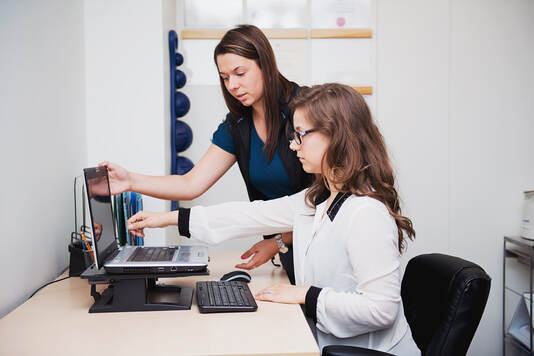
Many aches and injuries develop gradually from repeated stress, poor positioning, prolonged sitting, awkward movements, or workstations that are not properly set up for the person using them. These issues can affect office workers, healthcare workers, tradespeople, drivers, athletes, students, and anyone whose daily routine places repetitive demands on the body.
Ergonomics is especially important in the workplace, but it also applies to everyday life. Your desk setup, driving position, phone habits, sleeping posture, lifting technique, sports equipment, and household tasks can all influence how your body feels and functions.
Improving ergonomics can help reduce unnecessary strain, support better posture, improve movement efficiency, and lower the risk of recurring pain or injury.
When your body is repeatedly placed under stress, discomfort can build over time. Ergonomic concerns can contribute to a wide range of conditions, including:
Treating pain without addressing the reason it keeps coming back can lead to recurring symptoms. Ergonomic care looks at how your daily habits, work demands, and environment may be contributing to the problem.
Your first visit begins with a detailed assessment. Your CORPEO clinician will review your symptoms, medical history, work responsibilities, daily routines, and home or office setup. You may be asked about your desk position, chair, computer monitor, tools, equipment, driving habits, lifting tasks, or the movements you repeat most often throughout the day.
This information helps us identify what can be adjusted to reduce strain and support better movement.
Depending on your needs, ergonomic care at CORPEO can include:
We can provide guidance on desk setup, monitor height, chair positioning, keyboard and mouse placement, standing desk use, and other workstation adjustments to help reduce strain.
We help you improve the way you sit, stand, lift, bend, reach, carry, and move through daily tasks so your body works more efficiently and with less stress.
Small changes to your daily routine can make a meaningful difference. This may include taking movement breaks, changing positions more often, adjusting phone or computer habits, or modifying repetitive tasks.
When appropriate, we may recommend tools or supports such as wrist supports, braces, cushions, footwear considerations, or workstation accessories to improve comfort and reduce irritation.
If pain or injury is already present, your care may also include physiotherapy, chiropractic care, manual therapy, targeted exercises, stretching, joint mobilization, heat or cold therapy, and other treatments based on your condition.
Book Your Assessment
Receive Personalized Ergonomic Recommendations
Build Better Movement Habits
Work and Move with Less Pain
Pain from work, posture, or daily habits is often influenced by how your body moves through the environments you use most. With the right assessment and practical changes, many people can reduce discomfort, prevent recurring strain, and feel more confident in their daily routines. Contact CORPEO today to schedule an ergonomic assessment and learn how we can help you move more comfortably at work, at home, and throughout your day.