Foot pain can make everyday movement difficult. You may notice discomfort when walking, standing, using stairs, exercising, working, or wearing certain shoes. For some people, foot pain feels like a dull ache. For others, it may feel sharp, burning, stiff, or sensitive with pressure.
Foot pain may start suddenly after a fall, twist, impact, or increase in activity. It can also develop gradually from overuse, poor footwear, joint stiffness, tendon irritation, nerve sensitivity, arthritis, or changes in walking mechanics.
The foot is made up of many small bones, joints, muscles, ligaments, tendons, and nerves. These structures work together to support balance, weight-bearing, shock absorption, and movement. When the foot is painful or not loading well, it can also affect the ankle, knee, hip, or lower back.
At CORPEO, located in Gloucester Centre in Ottawa’s east end, our physiotherapy team takes a detailed approach to understanding what is contributing to your foot pain. The goal is to reduce discomfort, improve mobility, restore strength, and help you return to daily activities with more comfort and confidence.
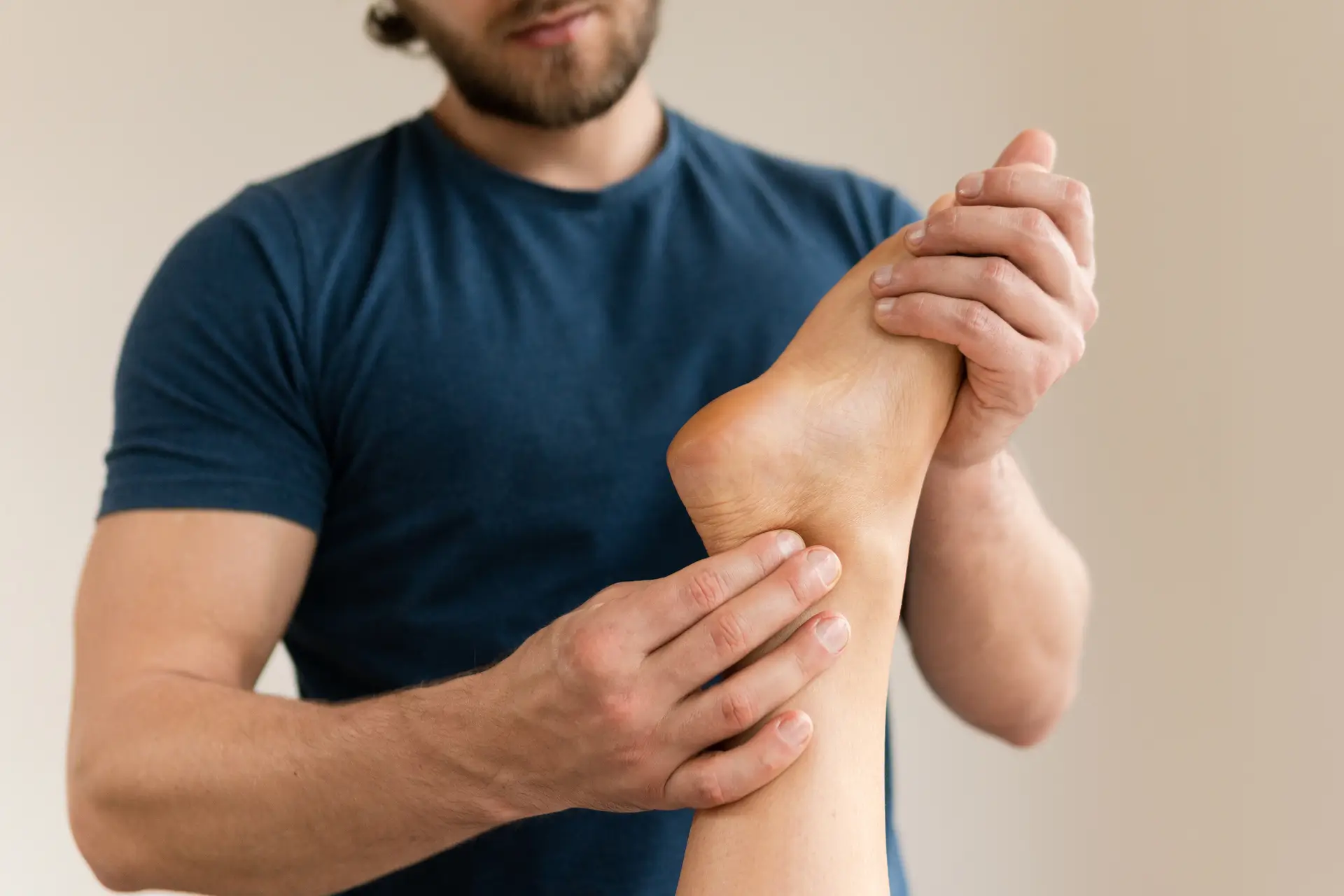
Foot pain can develop for many reasons. It may be related to repetitive strain, sudden injury, footwear, reduced strength, limited mobility, or irritation in the joints, tendons, nerves, or soft tissues of the foot.
Common contributors to foot pain include:
Plantar fasciitis is a common cause of heel pain. It involves irritation of the plantar fascia, a thick band of tissue that supports the arch of the foot. Pain is often felt under the heel or along the bottom of the foot, especially with first steps in the morning or after rest.
The Achilles tendon connects the calf muscles to the heel. It can become irritated from overuse, running, jumping, hill walking, tight calf muscles, or sudden increases in activity. Symptoms may include pain, stiffness, or tenderness near the back of the heel.
Pain in the ball of the foot can develop from repeated pressure, high-impact activity, footwear, or changes in how the foot is loading. It may feel worse with walking, running, standing, or pushing off through the toes.
A bunion is a bony change at the base of the big toe. It can cause pain, stiffness, pressure in footwear, and difficulty with walking or balance. Physiotherapy can help manage symptoms, improve mobility, and support better foot function.
Some foot pain is related to nerve irritation. Symptoms may include burning, tingling, numbness, or the feeling of walking on a pebble. These symptoms can be influenced by footwear, pressure, foot mechanics, or irritation higher up the leg.
Foot and ankle injuries can happen after a twist, fall, awkward step, or impact. These injuries may lead to swelling, stiffness, weakness, reduced balance, or difficulty walking. Physiotherapy can help restore movement, strength, and confidence after injury.
Arthritis or joint changes in the foot can cause aching, stiffness, swelling, and reduced mobility. Symptoms may be more noticeable in the morning, after activity, or when standing for longer periods.
Foot pain can vary depending on the cause, severity, and stage of recovery.
Symptoms may include:
Physiotherapy can help identify what is contributing to your foot pain and guide you through a personalized recovery plan. Your physiotherapist will assess the foot itself, while also considering how your ankle, knee, hip, strength, balance, footwear, and walking pattern may be involved.
At CORPEO, your assessment may include a discussion about your symptoms, injury history, activity level, footwear, work demands, exercise routine, and the movements that make your pain better or worse. Your physiotherapist may also assess range of motion, strength, joint mobility, tenderness, balance, gait, and functional movements such as squatting, stepping, or single-leg control.
Based on your assessment, your physiotherapy plan may include:
Gentle mobility and stretching exercises can help reduce stiffness, improve foot and ankle movement, and support more comfortable walking.
Targeted strengthening may focus on the foot, ankle, calf, and lower leg. Building strength can help improve support, balance, and tolerance for daily activity.
Hands-on techniques may be used to improve joint mobility, reduce soft tissue tension, and support more comfortable movement through the foot or ankle.
Your physiotherapist may work with you on balance, walking pattern, step control, and confidence on different surfaces.
Footwear, training load, standing tolerance, and activity habits can all influence foot pain. Your physiotherapist can help you adjust these factors to reduce irritation and support recovery.
As symptoms improve, your physiotherapist can guide you through a gradual return to walking, running, sport, work tasks, or exercise.
Your foot pain treatment plan is personalized to your symptoms, goals, and stage of recovery. Some people need help reducing pain after a recent injury. Others need a progressive plan to improve strength, mobility, balance, and walking tolerance.
As your symptoms improve, your physiotherapist will progress your exercises and activity plan safely. The goal is to help you reduce pain, restore function, improve confidence, and return to the activities that matter to you.
Book Your Assessment
Receive a Personalized Foot Pain Treatment Plan
Improve Mobility, Strength, Balance, and Walking Comfort
Return to Daily Life with More Confidence and Control
Foot pain can make daily movement frustrating, but physiotherapy can help you better understand your symptoms and take practical steps toward improved comfort and function. Contact CORPEO today to schedule a physiotherapy assessment at our Gloucester Centre clinic in Ottawa’s east end and learn how we can help with foot pain.