Jaw pain can affect everyday activities like talking, chewing, yawning, smiling, or eating certain foods. You may notice discomfort around the jaw joint, face, temples, ears, neck, or head. For some people, symptoms come and go. For others, jaw pain can become more persistent and interfere with daily comfort.
The temporomandibular joint, often called the TMJ, connects the jawbone to the skull. This joint works closely with the muscles of the jaw, face, neck, and head. When the joint or surrounding muscles become irritated, tense, stiff, or overloaded, it can lead to pain, clicking, tightness, headaches, or difficulty opening and closing the mouth.
TMJ dysfunction can develop gradually or after an injury. It may be related to jaw clenching, teeth grinding, stress-related tension, posture, arthritis, jaw trauma, neck stiffness, or changes in how the jaw moves.
At CORPEO, located in Gloucester Centre in Ottawa’s east end, our physiotherapy team takes a detailed approach to understanding what is contributing to your jaw pain. The goal is to reduce discomfort, improve jaw mobility, support muscle control, and help you return to daily activities with more ease.
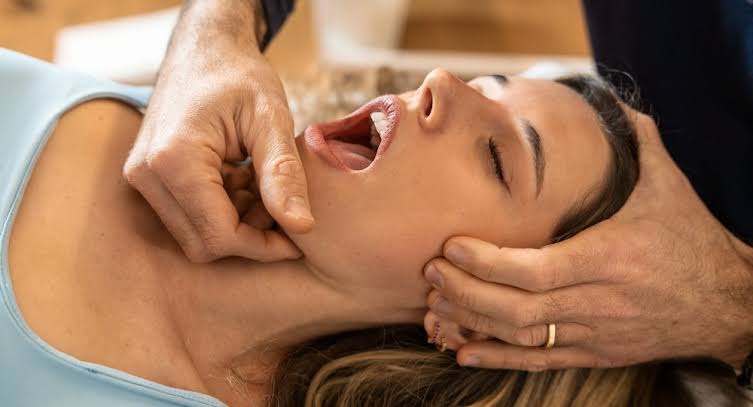
Jaw pain can occur when the temporomandibular joint, surrounding muscles, nerves, or nearby areas of the neck and head are not working comfortably together. Because the jaw is used often throughout the day, even small changes in tension, movement, or posture can become noticeable.
Common contributors to jaw pain and TMJ dysfunction include:
Clenching or grinding, also known as bruxism, can place extra pressure on the jaw joint and surrounding muscles. This may lead to jaw fatigue, facial tension, headaches, tooth sensitivity, or soreness when chewing.
The muscles around the jaw, face, temples, and neck can become tight or sensitive. This tension may be influenced by stress, posture, prolonged sitting, sleep habits, or repeated jaw use.
A direct hit, fall, whiplash injury, or sudden force can irritate the jaw joint or surrounding tissues. Symptoms may include pain, stiffness, clicking, reduced opening, or difficulty chewing.
Like other joints in the body, the TMJ can be affected by arthritis or joint irritation. This may contribute to stiffness, aching, reduced mobility, or discomfort with opening and closing the mouth.
The jaw, neck, and upper back are closely connected. Stiffness, muscle tension, or posture-related strain in the neck and shoulders may contribute to jaw discomfort or headaches.
Some people develop changes in how the jaw opens, closes, or tracks during movement. This may create clicking, locking, tightness, or difficulty opening the mouth fully.
Jaw pain and TMJ dysfunction can vary from person to person. Symptoms may be mild and occasional, or they may affect eating, talking, sleep, and daily comfort.
Symptoms may include:
Physiotherapy can help identify what is contributing to your jaw pain and guide you through a personalized treatment plan. Your physiotherapist will assess the jaw itself, while also considering the neck, posture, muscle tension, movement habits, and daily activities that may be influencing your symptoms.
At CORPEO, your assessment may include a discussion about your symptoms, jaw habits, clenching or grinding, headaches, neck discomfort, work posture, sleep, stress, eating habits, and the movements that make your symptoms better or worse. Your physiotherapist may also assess jaw range of motion, movement control, muscle tenderness, neck mobility, posture, and functional movements such as opening, closing, and chewing mechanics.
Based on your assessment, your physiotherapy plan may include:
Gentle exercises can help improve jaw movement, reduce stiffness, and support more comfortable opening and closing.
Your physiotherapist may guide you through exercises that help reduce jaw tension, improve coordination, and support more relaxed jaw positioning during the day.
Hands-on techniques may be used to help improve mobility, reduce muscle tension, and support more comfortable movement in the jaw, neck, or upper back.
Because the jaw and neck are closely connected, treatment may include exercises or strategies to improve neck mobility, upper back movement, and postural control.
Your physiotherapist can help you identify habits that may contribute to symptoms, such as clenching, chewing on one side, resting the jaw in a tense position, or prolonged posture strain. Small daily changes can help reduce irritation.
Stress and tension can contribute to jaw clenching and muscle tightness. Your physiotherapist may provide breathing, relaxation, pacing, and self-management strategies to help reduce flare-ups.
Your jaw pain treatment plan is personalized to your symptoms, goals, and comfort level. Some people need help improving jaw mobility and reducing muscle tension. Others need support for headaches, neck-related symptoms, clenching habits, or difficulty chewing.
As your symptoms improve, your physiotherapist will adjust your exercises and treatment plan safely. The goal is to help you reduce pain, improve jaw function, and feel more confident with eating, speaking, and daily movement.
Book Your Assessment
Receive a Personalized TMJ Treatment Plan
Improve Jaw Mobility, Muscle Control, and Daily Comfort
Return to Eating, Talking, and Daily Life with More Confidence
Jaw pain can make simple daily activities uncomfortable, but physiotherapy can help you better understand your symptoms and take practical steps toward relief. Contact CORPEO today to schedule a physiotherapy assessment at our Gloucester Centre clinic in Ottawa’s east end and learn how we can help with jaw pain and TMJ dysfunction.