Sports injuries can happen to anyone who enjoys being active. Whether you play competitive sports, train recreationally, run, lift weights, cycle, skate, dance, or stay active on weekends, an injury can quickly interfere with your routine and confidence.
Some sports injuries happen suddenly after a fall, twist, collision, awkward landing, or quick change in direction. Others develop gradually from overuse, repeated strain, poor recovery, weakness, mobility restrictions, or sudden changes in training load.
Sports injuries can affect muscles, joints, ligaments, tendons, bones, and nerves. They may limit your strength, balance, flexibility, coordination, and ability to perform sport-specific movements. Without proper rehabilitation, some injuries can linger, return, or lead to compensation in other areas of the body.
At CORPEO, located in Gloucester Centre in Ottawa’s east end, our physiotherapy team helps active individuals understand their injury, rebuild strength and mobility, and work toward a safe return to activity. The goal is to support recovery while also helping reduce the risk of future injuries.
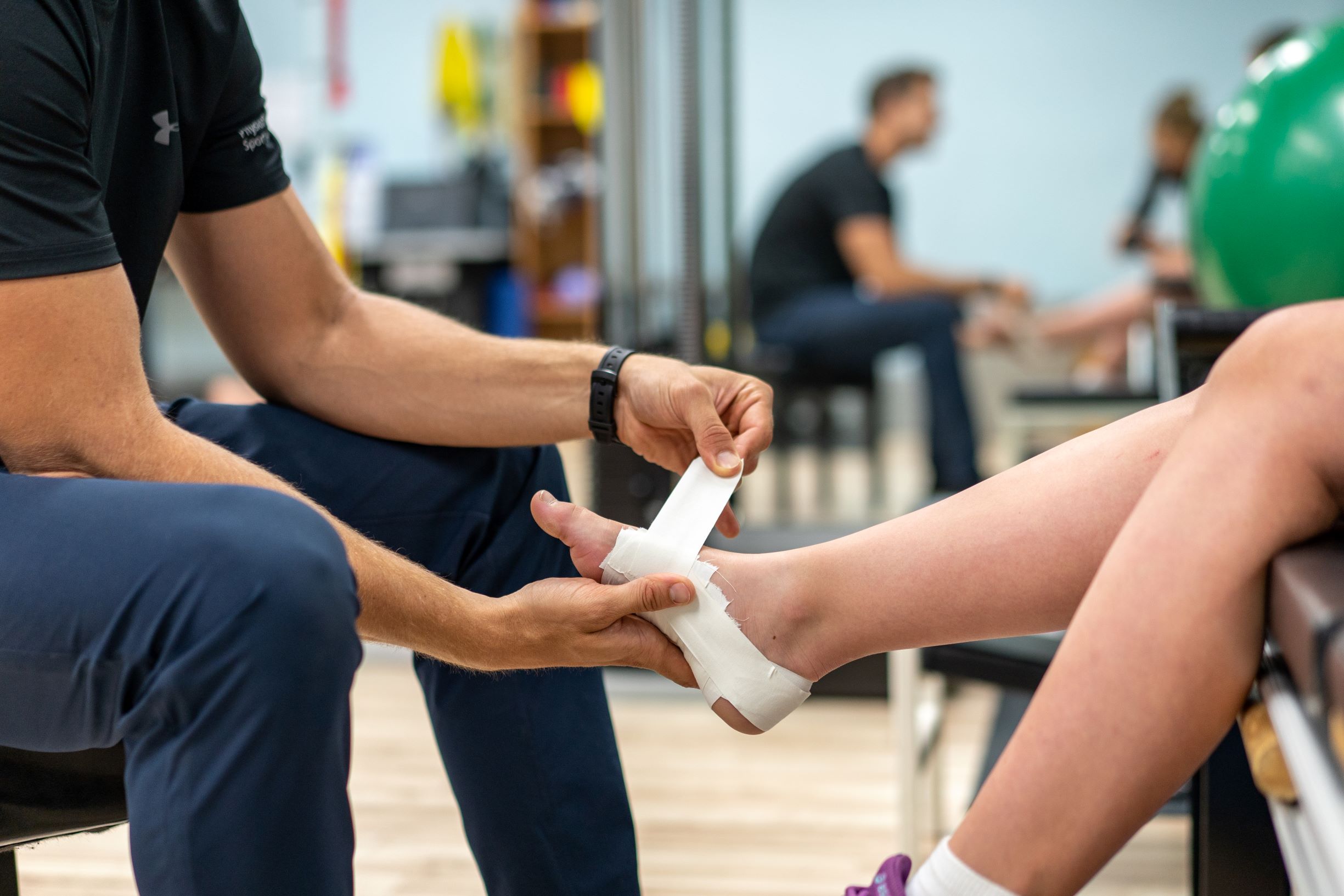
Sports injuries can occur for many reasons. They may be related to sudden trauma, repetitive stress, training errors, reduced strength, poor movement control, limited mobility, or not enough recovery between activities.
Common contributors to sports injuries include:
Sprains involve injury to ligaments, while strains involve muscles or tendons. These injuries often happen during running, jumping, pivoting, lifting, sprinting, or sudden changes in direction. Symptoms may include pain, swelling, weakness, bruising, stiffness, or difficulty using the injured area.
Overuse injuries develop gradually when the body does not have enough time to recover between repeated movements. This can affect runners, lifters, swimmers, cyclists, racquet sport athletes, and people returning to activity too quickly.
Tendons connect muscles to bones and help transfer force during movement. Sports-related tendon pain can develop from repeated jumping, sprinting, gripping, throwing, lifting, or sudden increases in training. Common areas include the Achilles tendon, patellar tendon, rotator cuff, and elbow tendons.
Knee and ankle injuries are common in sports that involve cutting, pivoting, jumping, landing, or contact. This may include ankle sprains, knee ligament injuries, meniscus irritation, patellofemoral pain, or general joint pain and instability.
Throwing, swimming, racquet sports, weight training, and contact sports can place repeated stress on the shoulder and elbow. These injuries may involve tendon irritation, muscle strain, joint stiffness, or reduced control with overhead movement.
Increasing intensity, distance, weight, frequency, or volume too quickly can overload the body. Poor sleep, stress, fatigue, and limited recovery time can also affect performance and injury risk.
Sports injuries can look different depending on the area involved, the type of injury, and the stage of recovery.
Symptoms may include:
Physiotherapy can help identify what is contributing to your sports injury and guide you through a structured recovery plan. Your physiotherapist will assess not only the injured area, but also your strength, mobility, balance, control, movement patterns, training habits, and sport-specific demands.
At CORPEO, your assessment may include a review of your symptoms, injury history, sport or activity level, training schedule, footwear or equipment, goals, and the movements that aggravate or relieve your pain. Your physiotherapist may also assess range of motion, strength, joint mobility, balance, landing mechanics, running or walking pattern, and functional movements related to your sport.
Based on your assessment, your physiotherapy plan may include:
Mobility work can help reduce stiffness, restore range of motion, and improve movement quality in the injured area and surrounding joints.
Targeted strengthening helps rebuild support, control, and power. Exercises may focus on the injured area as well as related regions such as the hips, core, shoulders, legs, or feet.
Balance, coordination, and control exercises can help improve how your body responds to movement, impact, and changes in direction. This is especially important after ankle, knee, or lower-body injuries.
Hands-on techniques may be used to improve joint mobility, reduce muscle tension, and support more comfortable movement during recovery.
As you progress, your physiotherapist may include exercises that prepare you for the demands of your sport. This may involve running drills, jumping and landing practice, cutting movements, throwing progressions, lifting technique, or return-to-play planning.
Your physiotherapist can help you manage training volume, recovery, warm-ups, technique, pacing, and gradual return to activity. This helps reduce the risk of flare-ups or repeat injuries.
Your sports injury rehabilitation plan is personalized to your injury, sport, goals, and stage of recovery. Some people need help reducing pain and swelling after a recent injury, while others need a progressive plan to rebuild strength, confidence, and performance.
As your symptoms improve, your physiotherapist will progress your exercises and activity plan safely. The goal is to help you return to sport or exercise with better movement, improved strength, and a clearer understanding of how to manage your body moving forward.
Book Your Assessment
Receive a Personalized Sports Injury Treatment Plan
Rebuild Mobility, Strength, Balance, and Control
Return to Sport and Activity with More Confidence
A sports injury can be frustrating, but physiotherapy can help you understand what happened, recover safely, and work toward returning to the activities you enjoy. Contact CORPEO today to schedule a physiotherapy assessment at our Gloucester Centre clinic in Ottawa’s east end and learn how we can help with sports injury recovery.