Kinesio taping is a therapeutic technique used in physiotherapy to support muscles and joints while allowing the body to move naturally. Unlike rigid athletic tape, Kinesio tape is flexible and designed to move with you, making it useful for athletes, active individuals, and people recovering from certain injuries or movement-related concerns.
When applied properly, Kinesio tape can help provide support, improve body awareness, reduce strain, and assist with swelling or discomfort. It is often used as part of a broader physiotherapy plan that may also include exercise, manual therapy, education, and return-to-activity guidance.
At CORPEO, our physiotherapy team uses Kinesio taping based on your assessment, symptoms, activity level, and goals. Whether you are recovering from a sports injury, dealing with recurring discomfort, or looking for additional support during activity, we can help determine whether taping is appropriate for your care plan.
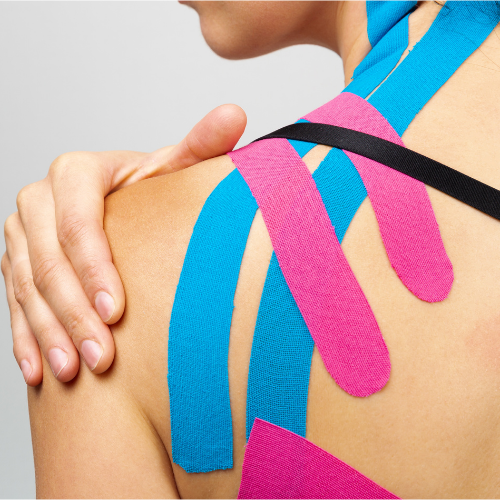
Kinesio taping is commonly used to support injured or irritated tissues without fully restricting movement. This can be helpful when you need support during sport, exercise, work, or daily activity.
Depending on your condition, Kinesio taping may help by:
Kinesio taping is not usually used as a stand-alone treatment. It works best when combined with a plan that addresses the underlying cause of your symptoms, such as weakness, mobility restrictions, poor movement mechanics, or overload.
Kinesio taping can be used for a variety of musculoskeletal concerns, especially when additional support or movement feedback may help during recovery.
It may be used for conditions such as:
Your care begins with a physiotherapy assessment. Your physiotherapist will review your symptoms, injury history, activity demands, goals, and how your discomfort is affecting your movement. They may assess strength, range of motion, swelling, posture, balance, joint mobility, and movement mechanics.
If Kinesio taping is appropriate, your physiotherapist will apply the tape in a way that matches your needs. The application may be designed to support a joint, assist muscle function, provide sensory feedback, manage swelling, or reduce strain during movement.
Your physiotherapist will also explain how long to keep the tape on, when to remove it, and what signs to watch for. If you have sensitive skin or irritation, the tape should be removed.
Kinesio taping can be a helpful tool, but lasting recovery usually depends on a complete treatment plan. At CORPEO, taping is often combined with active rehabilitation and education so that your body becomes stronger, more mobile, and better prepared for the activities you want to return to.
Your physiotherapy plan may include:
Your physiotherapist can help improve how you move during sport, exercise, work, or daily tasks so that irritated areas are placed under less unnecessary stress.
A targeted exercise program can help improve strength, flexibility, control, and range of motion in the areas contributing to your symptoms.
Manual therapy may be used to reduce stiffness, improve mobility, decrease discomfort, and support better movement quality.
You will receive guidance on activity modification, recovery, warm-ups, home exercises, and strategies to reduce the risk of recurring symptoms.
Book Your Assessment
Receive a Personalized Treatment Plan
Use Kinesio Taping if Appropriate for Your Needs
Build Strength, Mobility, and Confidence
A sports injury or movement-related concern can make it harder to train, compete, work, or enjoy daily life. Kinesio taping may help provide support and comfort while you recover, especially when it is used alongside a complete physiotherapy plan. Contact CORPEO today to schedule an assessment and learn whether Kinesio taping is right for your recovery.