Dry needling is a physiotherapy technique used to help treat muscle tension, trigger points, pain, and movement restrictions. It involves inserting a very thin, sterile needle into specific areas of tight or sensitive muscle tissue to help stimulate a local response and support the body’s natural recovery process.
This treatment is often used for musculoskeletal conditions involving pain, stiffness, reduced mobility, or muscle tightness. For some patients, dry needling can be a helpful part of a broader physiotherapy plan that also includes exercise, manual therapy, mobility work, and education.
At CORPEO, dry needling is provided based on your assessment, symptoms, comfort level, and treatment goals. Our physiotherapy team uses this technique as part of a personalized approach to help reduce discomfort, improve movement, and support your return to daily activities.
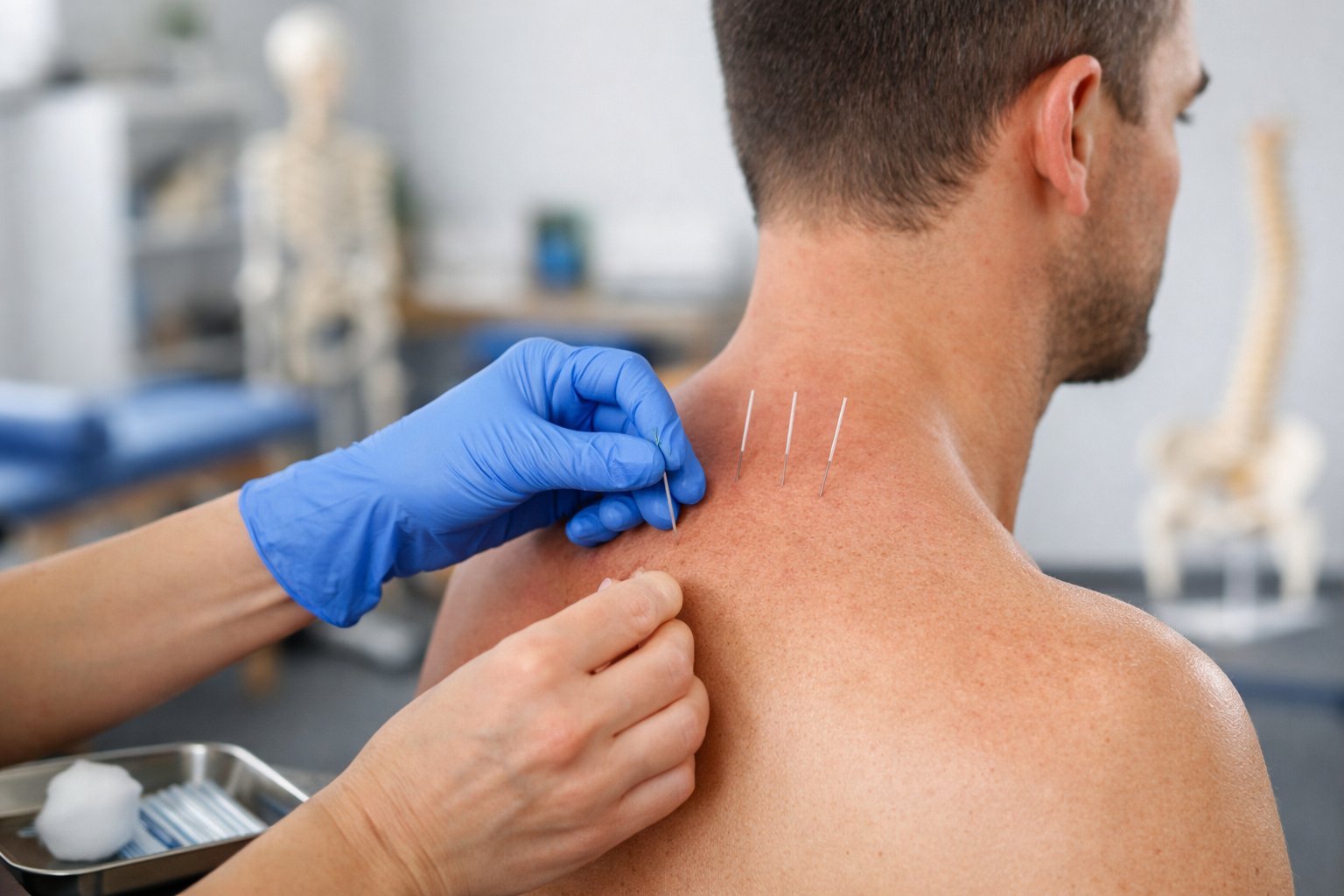
Dry needling targets areas of muscle that may be tight, irritated, or contributing to pain. These areas are often referred to as trigger points and can sometimes cause discomfort locally or refer pain to nearby regions.
By stimulating these points with a fine needle, dry needling can help reduce muscle tension, improve circulation in the affected area, and support better mobility. The goal is not only to reduce pain, but also to improve how the muscle functions as part of your overall movement.
Dry needling is different from acupuncture. While both use thin needles, dry needling is based on musculoskeletal assessment and focuses on muscles, trigger points, and movement-related concerns.
Dry needling may be used to help manage a variety of musculoskeletal concerns, especially when muscle tightness, trigger points, or movement restrictions are contributing to symptoms.
Depending on your condition, dry needling may help with:
Your care begins with a detailed physiotherapy assessment. Your physiotherapist will review your symptoms, medical history, movement limitations, areas of pain, and personal goals. They will also assess strength, mobility, muscle tension, joint movement, and overall function to determine whether dry needling is appropriate for your care plan.
If dry needling is recommended, your physiotherapist will explain the treatment, answer your questions, and make sure you are comfortable before beginning. Thin, sterile, single-use needles are inserted into targeted areas based on your symptoms and assessment findings.
You may feel a brief ache, twitch, heaviness, or pressure during treatment. Some people feel immediate relief, while others notice soreness similar to post-exercise muscle soreness for a short period afterward. Your physiotherapist will guide you on what to expect and how to manage your response after treatment.
Dry needling is often most effective when combined with other physiotherapy treatments that address the underlying cause of your pain or movement limitation.
Your treatment plan may include:
Manual therapy techniques can help improve joint mobility, reduce stiffness, decrease pain, and support better movement quality.
Specific exercises help improve strength, flexibility, endurance, and control so your body can move more efficiently and with less irritation.
Your physiotherapist can help you improve posture, coordination, muscle activation, and movement patterns that may be contributing to your symptoms.
Stretching, mobility drills, warm-up strategies, pacing advice, and recovery education can help support longer-term progress beyond the treatment session.
Dry needling can be a helpful option for people dealing with muscle-related pain or restricted movement. Potential benefits may include:
Book Your Assessment
Receive a Personalized Treatment Plan
Begin Dry Needling if Appropriate for Your Needs
Build Strength, Mobility, and Long-Term Control
Pain, tightness, and restricted movement can make everyday activities more difficult. Dry needling may help reduce muscle tension and support recovery when used as part of a complete physiotherapy plan. Contact CORPEO today to schedule an assessment and learn whether dry needling is the right option for your care.